FTTH aerial hardware selection guide for Peru
Choosing the wrong hardware for an aerial FTTH network in Peru is not a minor mistake. It means rework in the field, a network that fails ahead of schedule, and a client who never calls back.
In Peru, FTTx projects are growing rapidly, especially in homes passed (HHPP) at the national level, and with that growth comes constant pressure on contractors and designers: do more, faster, with materials that may or may not arrive depending on the supplier of the month.
This guide is written for the designer who needs to specify correctly from the BOM, for the contractor who cannot afford a field failure, and for the procurement manager who wants a technical criterion before approving a purchase order.
What is aerial outside plant and why does hardware matter?
Aerial outside plant is the set of infrastructure that carries fiber optic cable from the central office to the subscriber's premises, suspended on poles. In a well-designed FTTH network, the cable does not touch the pole directly: the hardware does the work.
Hardware serves three critical functions:
- Suspend the cable along the span between poles
- Anchor the cable at tension points and changes of direction
- Secure passive equipment (CTO enclosures, NAPs, cable reserves)
When the hardware fails, the network fails. Corrosion, mechanical fatigue, and improper sizing are the most common causes of outside plant incidents in Peru. All three can be prevented by choosing the right material from the start.
Types of hardware for aerial FTTH networks
1. Suspension clamps
The suspension clamp is the most widely used hardware in the entire aerial network. It is installed at intermediate spans to support the cable without generating tension at the attachment point.
There are three main types:
SPAN clamp type Q
The most common type in Peru. Jaw design with a "Q"-shaped opening, installed without special tools. Ideal for spans of up to 50 meters on wooden or concrete poles. Recommended for distribution networks in urban and peri-urban areas.
SPAN clamp type C
"C" profile with lateral closure. Higher load capacity than the type Q, suitable for larger-diameter cables or longer spans. Recommended for segments with higher mechanical tension or areas with frequent wind.
3-bolt suspension clamp
High-strength hardware for critical points: minor direction changes, long spans, or installations in areas with high dynamic loading (highlands, upper jungle). The three bolts distribute tension evenly and prevent cable wear at the attachment point.
Selection criterion: Choose the clamp type based on cable diameter, span length, and climatic conditions of the area. Do not use a type Q where a 3-bolt clamp is required.
2. Anchoring and retention hardware
Anchoring hardware is installed at the ends of spans, at changes of direction, and at tap-off points. These components bear the highest tensile load of the cable run.
Preformed dead-ends
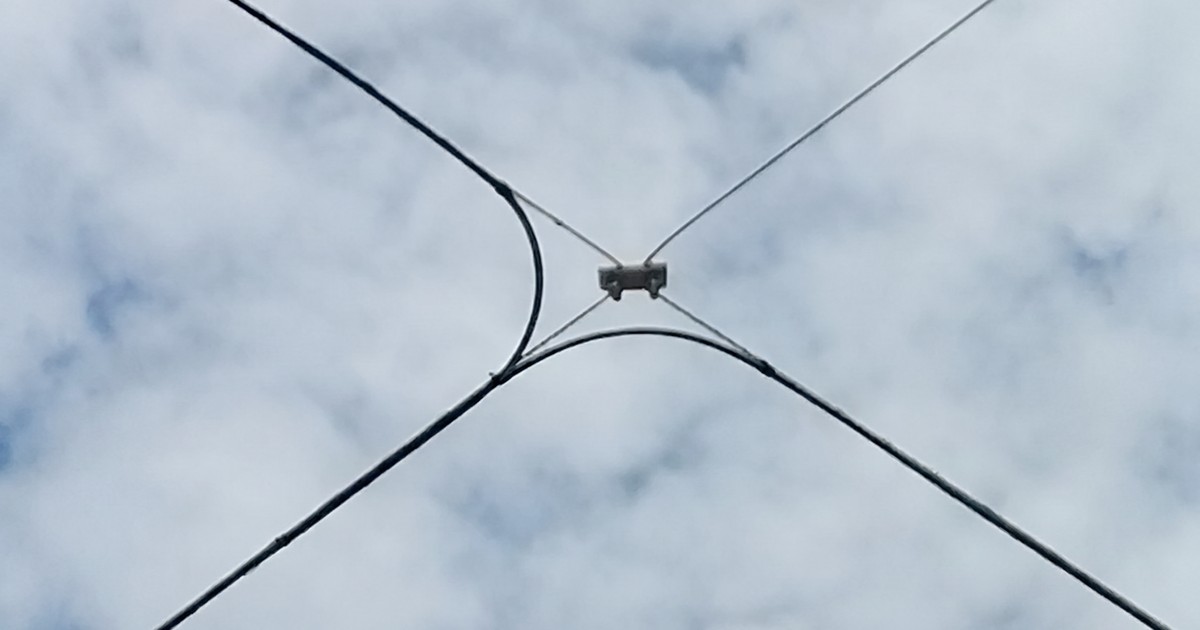
Coils of galvanized or stainless steel wire that wrap around the cable. They do not exert point pressure on the fiber, distributing the load across several centimeters. This is the recommended anchoring hardware for fiber optic cables with integrated messenger wire.
Clevis and eye bolt
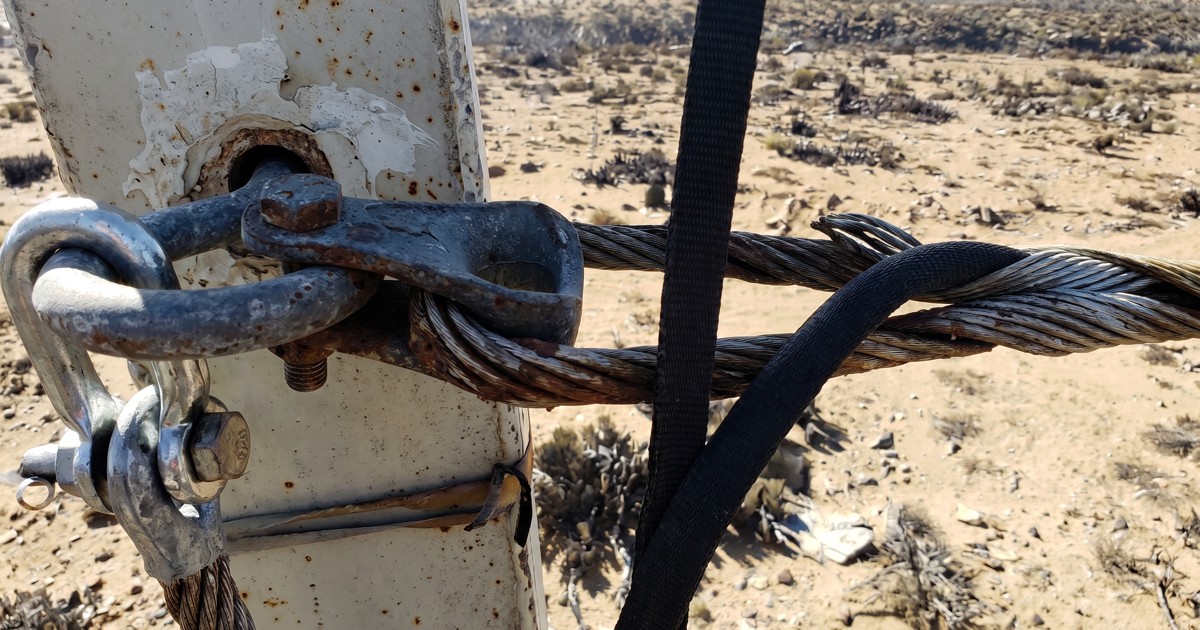
High-strength metal connectors that join the retention hardware to the pole or crossarm. The clevis works in tension and allows rotation; the eye bolt is installed directly into the pole. Both must be galvanized or stainless steel depending on the installation zone.
Padlock-type shackles
For tap-off points where multiple elements of the suspension line need to be joined. The padlock-type shackle allows secure closure without the need for special tools in the field.
3. Cable support and reserve
Cable reserve crossarm
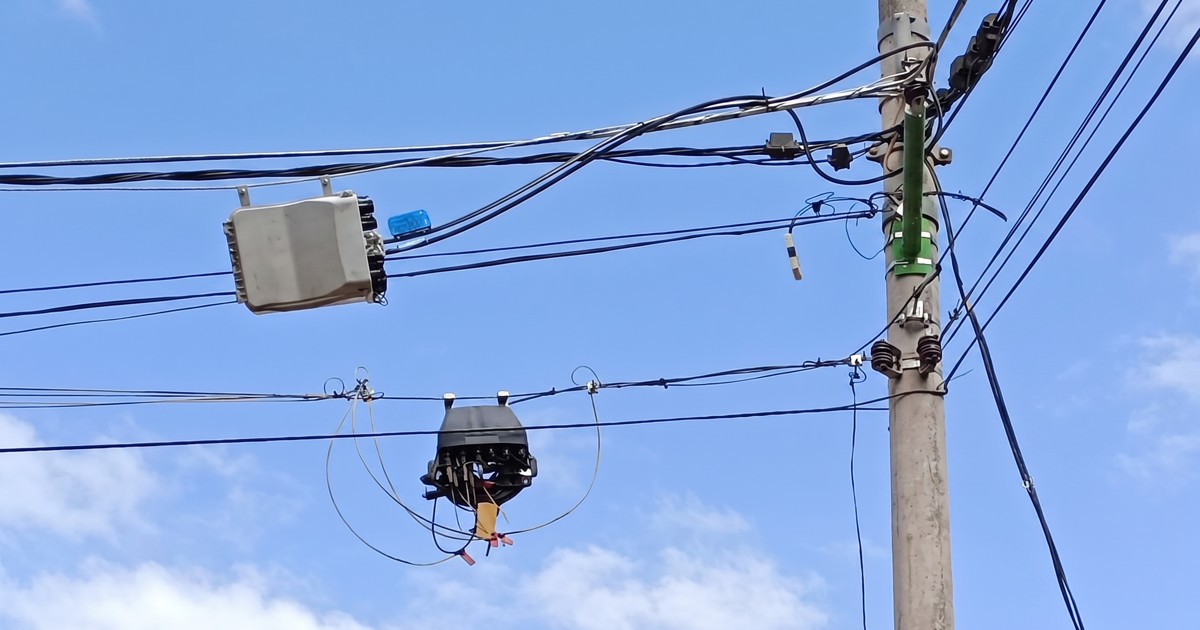
A metal structure attached to the pole to store the fiber optic cable reserve at splice or tap-off points. A properly installed crossarm protects the reserve from mechanical stress and facilitates access for future maintenance.
4. CTO and splice closure mounting
CTO bracket / splice closure mount
A metal bracket designed to secure the CTO or the splice closure directly to the pole. It supports the weight of the enclosure and the dynamic loads generated by the incoming and outgoing cable.
This is one of the most underestimated hardware items in network design. A poorly mounted CTO creates tension on internal splices, shortens equipment lifespan, and complicates maintenance. See full guide: CTO bracket: when and how to install it correctly.
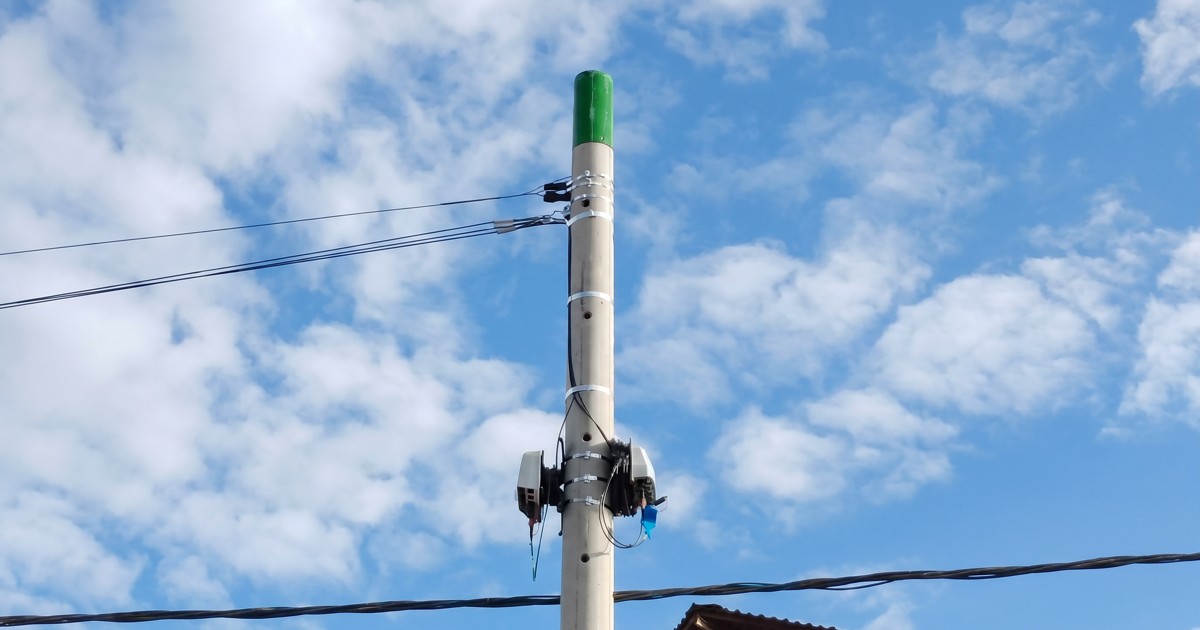
5. Stainless steel banding strap and buckles
The stainless steel banding strap is the most versatile fastening system in aerial outside plant. It is used to:
- Attach any component to the pole (enclosures, messenger wires, reserves)
- Secure brackets and clamps when no bolt hole is available
- Install on concrete, wooden, or metal poles
It is installed with a stainless steel buckle that allows tensioning and locking the strap without welding. The most common width for FTTH installations is 19 mm to 25 mm.
Important note: Galvanized banding corrodes in coastal areas within 2 to 3 years. In Lima, Callao, Trujillo, or Piura, stainless steel banding is the correct specification, not a cost upgrade.
6. Messenger wire
The messenger wire is the galvanized steel cable strung between poles to support the fiber optic cable in installations using cable without an integrated messenger.
The messenger gauge must be calculated based on:
- Cable weight per linear meter
- Maximum span length
- Additional wind and ice loading (in the highlands)
- Maximum allowable tension on the poles
An incorrect gauge selection causes excessive sag, overloads the poles, and can collapse during a weather event. See full guide: How to choose the right messenger wire gauge for your area.
7. Drop cable clamps
The drop cable (the last segment between the CTO and the subscriber's premises) requires specific hardware for attachment to the building facade and the pole tap-off point.
Plastic drop clamp
A high-UV-resistance polymer clamp for securing the drop cable to the facade. Designed to avoid damaging the cable jacket and to allow installation without drilling on concrete and brick surfaces.
D-type cable clamp
For attaching the drop cable or distribution cable to poles. The "D" shape wraps around the pole and secures the cable laterally, allowing multiple exits from a single point.
Quick selection table
| Function | Hardware | Recommended material | Coastal zone | Highlands/Jungle |
|---|---|---|---|---|
| Span suspension | SPAN clamp Q / C | Galvanized steel | Stainless if possible | Galvanized |
| Critical-point suspension | 3-bolt clamp | Galvanized steel | Stainless | Galvanized |
| Cable anchoring | Preformed dead-end | Galvanized steel | Stainless | Galvanized |
| Structural connection | Clevis + eye bolt | Galvanized steel | Stainless | Galvanized |
| Tap-off | Padlock-type shackle | Galvanized steel | Stainless | Galvanized |
| Cable reserve | Reserve crossarm | Galvanized steel | Galvanized | Galvanized |
| CTO/splice closure mount | CTO bracket | Galvanized steel | Stainless | Galvanized |
| Pole attachment | Banding + buckle | Stainless steel | Stainless mandatory | Stainless |
| Messenger | Messenger wire | Galvanized steel | HD Galvanized | HD Galvanized |
| Drop service | Drop clamp | UV-rated plastic | UV-rated plastic | UV-rated plastic |
Coastal zone = sustained relative humidity >70%, presence of airborne sea salt.
Which materials to specify and why
Galvanized steel
The industry standard for outside plant in inland areas (highlands, jungle, non-saline zones). The zinc coating protects the steel from oxidation under normal conditions, with an expected service life of 10 to 15 years in properly executed installations.
Stainless steel
Recommended for coastal areas with airborne salinity and for hardware with the highest structural criticality (banding, buckles, anchoring clamps). Higher upfront cost, significantly longer service life in aggressive environments.
Engineering-grade polymer (PA66-GF30 or similar)
For drop cable clamps and lightweight brackets. Must include UV stabilizer to withstand continuous sun exposure. Polymers without UV stabilizer become brittle within 12 to 18 months in high solar radiation areas (northern coast, highlands).
Why the supplier matters as much as the hardware
A correctly specified piece of hardware installed with the wrong product produces the same result as low-quality hardware. The three most common field issues are:
- Right hardware, wrong material: galvanized clamp in a coastal zone, non-stainless banding in Callao.
- Right hardware, wrong sizing: messenger wire gauge insufficient for the actual span.
- Wrong hardware for the application: suspension clamp used as anchoring hardware.
Technical advisory before purchase prevents all three errors. At Monstertek, the quotation process includes a specification review based on project conditions, not just order fulfillment.
Stock available in Peru
All hardware described in this guide is in stock and available in Peru for immediate delivery. Monstertek operates with a local presence in Lima (Miraflores) and distributes nationwide through specialized hardware stores and contractors.
For technical quotations or specification inquiries:
📲 +51 999 000 361 · +51 990 983 671
🌐 monstertek.net/contact
References
Need hardware for your FTTH project?
Tell us what you need and a specialist will contact you with availability, timelines and pricing.
Talk to a specialist →